1 / 2

Affordable Education Loans for Your Academic Dreams!
2 / 2
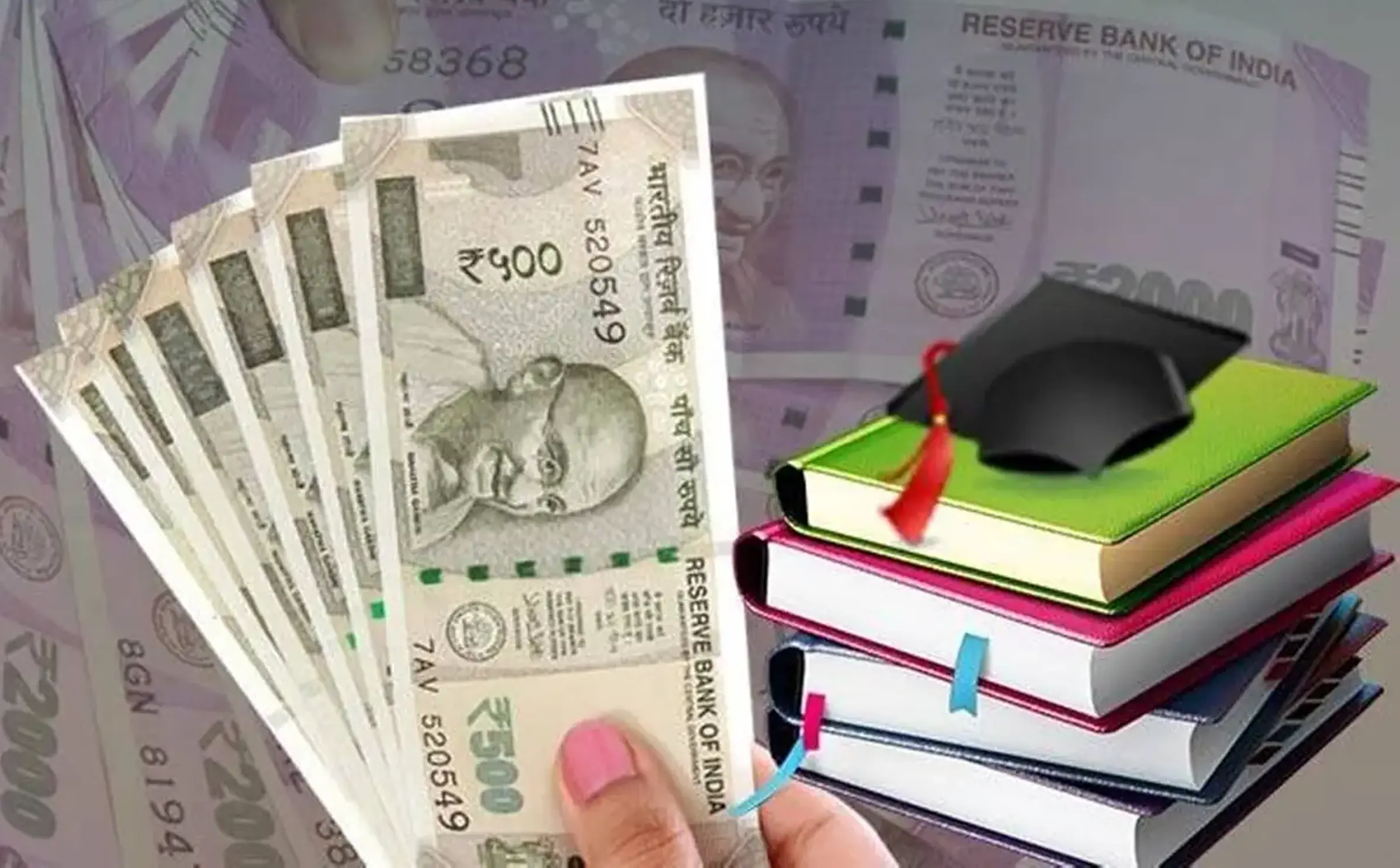
Get affordable Education Loans from top lenders for your child's brighter future!
| Particulars | Charges |
|---|---|
| Loan Processing Fees | 0.5% to 2% of Loan Amount |
| Loan Cancellation | 0 |
| Stamp Duty Charges | As per actuals |
| Legal Fees | As per actuals |
| Penal Charges | Usually @ 2% per month; 24% p.a. |
| EMI / Cheque Bounce Charges | Around Rs 590 per bounce |
To be eligible for an education loan, applicants typically need to be within a certain age range, have a good academic record, be enrolled in a
recognized educational institution for an eligible course, and have a co-applicant, often a parent or guardian. Financial stability and
creditworthiness are also important factors, and the course and institution should be recognized by relevant authorities. Each lender may have
specific eligibility criteria, so it's advisable to check with them for details.
A moratorium period for an education loan is a specified period during which the borrower is not required to make any repayment towards the
principal amount but only the interest portion of the loan. This period usually starts from the disbursement of the loan and ends after the
completion of the course or a few months after the student secures employment, whichever is earlier. The purpose of the moratorium period is
to provide students with a grace period to focus on their education and secure a job before they start repaying the loan.
Repayment of an education loan typically starts after the moratorium period ends. The exact timing can vary depending on the lender and the
terms of the loan agreement. In most cases, repayment begins either immediately after the moratorium period ends or after a specified grace
period, such as six months to a year. It's important to check the terms of your loan agreement to understand when exactly you are required to
start repaying the loan.
In education loans, repayment options typically include Equated Monthly Installments (EMIs) after a moratorium period, step-up or step-down
EMIs based on expected income changes, interest-only payments during the moratorium period, and bullet repayment where the entire principal
and interest are paid at the end. Borrowers can choose the option that best fits their financial situation and repayment capacity.
Yes, you can typically prepay your education loan either in part or in full. Prepayment allows you to pay off the loan before the end of the
loan tenure. Some lenders may charge a prepayment penalty or fee for early repayment, so it's advisable to check with your lender regarding
their prepayment policies.
To start repaying your education loan, review your loan agreement for the repayment schedule and EMI amount. Set up a bank account for payments
and calculate your EMI based on the loan terms. You can then start making payments either manually or through automatic deductions as per the
repayment schedule.
Yes, there is a tax benefit for education loan repayment in India under Section 80E of the Income Tax Act. According to this section, the
interest paid on an education loan for higher education is eligible for deduction from the total taxable income. The deduction is available for
a maximum of 8 years or until the interest is fully repaid, whichever is earlier. The benefit is available for loans taken for the taxpayer,
spouse, children, or for a student for whom the taxpayer is a legal guardian.
If you miss education loan payments, you may incur late fees, damage your credit score, face default and legal action from the lender, and
potentially involve your cosigner in repayment. Communicating with your lender about payment difficulties is crucial to explore options and
avoid default.
Yes, you may be able to change your repayment plan for an education loan later, depending on the lender's policies and the terms of your loan
agreement. Some common options for changing your repayment plan include switching from a standard repayment plan to an income-driven repayment
plan, extending the loan term to lower your monthly payments, or choosing a different repayment schedule. It's advisable to contact your lender
to discuss your options and determine if changing your repayment plan is possible and beneficial for your financial situation.
Yes, international students can get education loans to study abroad, but they may need a co-signer who is a resident or citizen of the country
where the loan is being obtained. Requirements vary by lender and country, so it's best to research available options and eligibility criteria.
Yes, you may need a co-borrower or guarantor for an education loan, especially if you are a student or have a limited credit history. A
co-borrower or guarantor provides additional assurance to the lender that the loan will be repaid in case you are unable to do so. The specific
requirements for a co-borrower or guarantor can vary depending on the lender and your individual circumstances. It's advisable to check with
the lender regarding their specific requirements for co-borrowers or guarantors when applying for an education loan.
To apply for an education loan, research lenders and compare options, check eligibility criteria, gather required documents, fill out the
application form accurately, and submit it along with the documents to the lender. After verification and approval, the loan amount will be
disbursed directly to the educational institution. Repayment usually starts after the moratorium period ends.
The maximum loan amount for an education loan varies depending on the lender, course, and your financial situation. Lenders typically offer
loans covering up to 100% of tuition fees and related expenses, but the actual amount depends on factors like course fees and your ability to
repay.
To apply for an education loan, you typically need to provide proof of identity (such as a passport or Aadhaar card),proof of address
(such as a utility bill), proof of admission to the educational institution, course fee details, academic records, and income proof of the
co-borrower or guarantor, if applicable. Additional documents may be required based on the lender's requirements. It's advisable to check with
the lender for the specific documentation needed for your education loan application.
The most suitable time to apply for an education loan is after securing admission to the educational institution. Applying early allows for
timely processing and disbursement of the loan amount.
Yes, Non-Resident Indians (NRIs) are eligible for education loans from banks in India, subject to certain conditions. NRIs may need to provide
additional documents such as a valid passport, visa, and proof of NRI status. Additionally, they may be required to have a co-borrower or
guarantor who is a resident of India. The specific eligibility criteria and terms can vary among lenders, so it's advisable to check with the
bank for their requirements.